Innokin Trine: Separating Battery Life from Device Life
Innokin's Trine separates its battery from the control body. That design choice opens a useful discussion about component life, without proving a whole-device environmental benefit.
Key points
- Trine was announced in January 2024; this is a design retrospective, not a new launch.
- Innokin documents a removable B1000 battery alongside a separate control body and pod.
- Replaceability alone does not establish real-world service life or lifecycle emissions savings.
Innokin’s Trine raises a hardware question that a capacity figure cannot answer: which parts of a device must be replaced when its battery reaches the end of its useful life? The distinction between a rechargeable battery and a replaceable one is central to this existing platform.
This is a retrospective examination of published documentation, not a new-product announcement or a hands-on performance review.
A design built around component boundaries
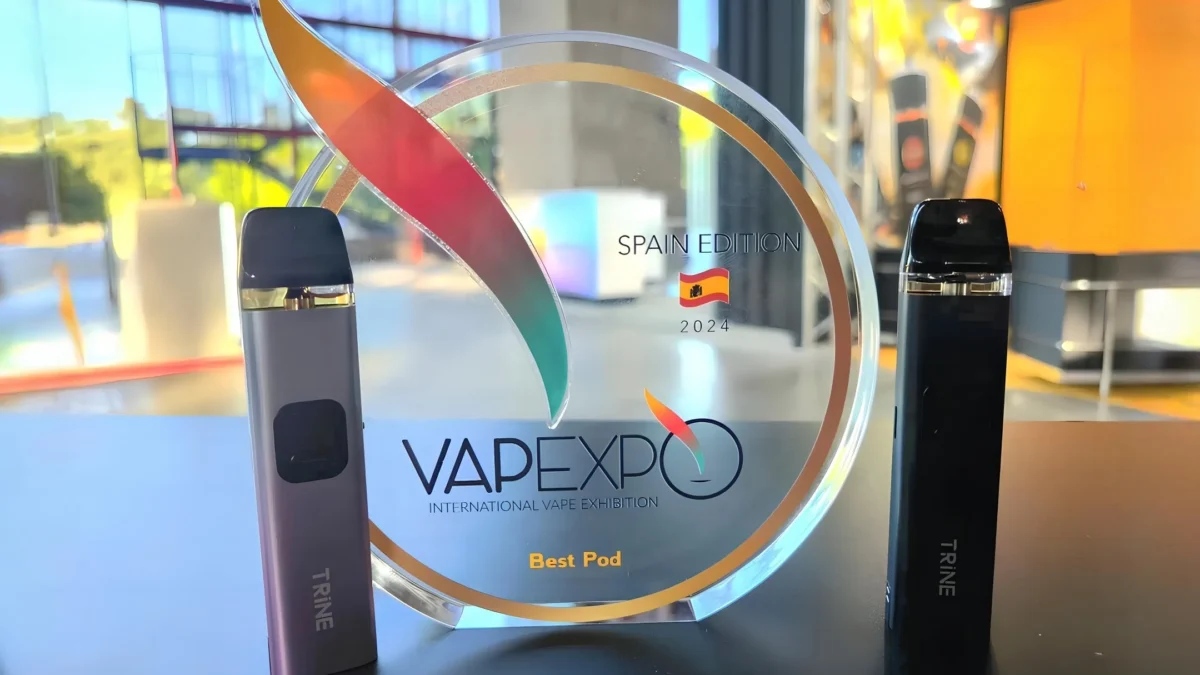
Innokin announced Trine on January 11, 2024. Its launch statement described three distinct elements: an atomizer, a control section and a removable battery. The company also introduced EcoDrain, its branded battery-discharge technology. These are descriptions of the manufacturer’s design and objectives, not independent findings about recycling performance. Innokin’s launch announcement establishes that historical context.
A battery and a control circuit do not necessarily reach the end of their useful lives together. Separating them creates the possibility of retaining functioning hardware when the battery needs replacement. Whether that possibility translates into longer service depends on replacement availability, the condition of the remaining components and how the device is maintained.
What the specification actually establishes
The Trine product page identifies the removable battery as the B1000, rated at 1,000mAh. It lists a 2mL Vcap pod, a 6–25W output range and USB-C charging at 5V/1A. Those figures describe the documented configuration. They are not measurements of daily runtime, battery longevity or the number of replacement cycles a device will withstand.
For an assessment of modularity, the important detail is not simply the size of the battery. It is that the battery has its own identity within the system, rather than being treated as inseparable from the control body.
Replaceability is a starting point, not a lifecycle result
VapeBrief’s reading is that this architecture deserves examination on its own terms. Claims about lower waste or emissions require additional evidence: actual replacement patterns, collection arrangements and end-of-life treatment, not just a diagram showing detachable parts.
The two official materials reviewed here do not quantify lifecycle emissions savings or collection rates. Trine therefore offers a concrete case study in separating battery replacement from device replacement, while its wider environmental outcomes remain a separate question.
Editorial scope: independent analysis of official documentation reviewed on October 26, 2026. No device testing was conducted for this article.
Sources
18+ only. This site is for adult readers and provides news and information only. It is not medical, legal or purchase advice. Nicotine is addictive. Always check the official text of any regulation in your market. Health Information